Aristillus
Sábado, 19 de Mayo de 2012 16:40
Scorpius
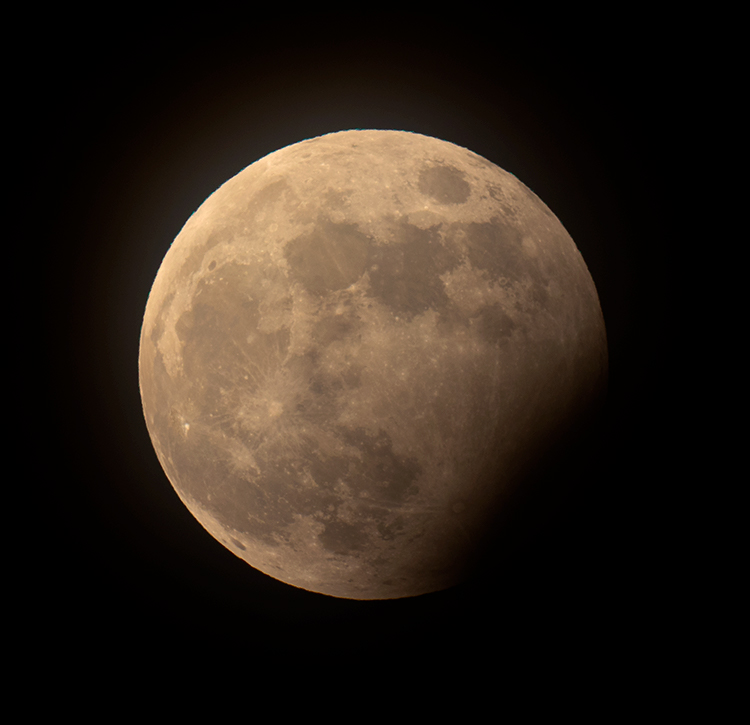
Mostramos una toma de Aristillus, cerca de la fase llena, donde se aprencian los rayos del impacto.
An Aristillus photo taken near full Moon phase. Its rays are clear in the image.
Leer más...
Plato
Jueves, 10 de Mayo de 2012 00:00
Scorpius
El crater Plato está inundado de lava, pero contiene en su interior algunos cráteres pequeños. En la zona, está el conocido Monte Pico o los Montes Tenerife. En el borde derecho de la imagen de puede ver claramente el Vallis Alpes, originado por una falla tectónica.
Plato crater is flowed by lava, but some small craters are placed on it. Around this carter, some prominent peaks are well-known, like Mons Pico or Montes Tenerife. At the right border, Vallis Alpes is clearly visible.
Leer más...
Dorsa Oppel
Martes, 08 de Mayo de 2012 00:00
Scorpius
La dorsal Oppel se localiza en uno de los bordes de Mare Crisium. La imagen se tomó pocos dÃas después de la Luna Llena, y muestra unas sombras impresionantes producidas por las montañas cercanas. Se han sobresaturados las zonas brillantes para hacer más destacables las sombras y algún domo lunar.
Dorsa Oppel is placed in the Mare Crisium border. This image was taken few days after full Moon phase, and It show some impressive shadows from near mountains. Image is enhanced to show shadows and some domes over the maria plain.
Leer más...
Marte 10-03-2012
Martes, 24 de Abril de 2012 21:47
Scorpius
La nubosidad en el planeta es evidente. Destaca la de tipo orográfica en la zona de Tharsis y Monte Olimpus.
Orographic clouds are evident over Tharsis area and Mons Olimpus.
Leer más...
Júpiter 27-02-2012
Jueves, 03 de Mayo de 2012 00:00
Scorpius
El último Júpiter de la temporada se registro con mal seeing y bajo en el horizonte. Las manchas en el borde inferior izquierdo son dos motas de polvo.
On February, 27th, we took the last image of this planet in the current season. It was low in the western horizon, so the seeing wasn't goog too. To "big"Â dust motes are clearly visible at the left-down border.
Leer más...
Mare Crisium and Mare Fecunditatis
Sábado, 28 de Abril de 2012 00:00
Scorpius
Mosaico de dos imágenes donde se observa Mare Crisium y Mare Fecunditatis. Se observan muchos rayos brillantes rpoducidos los materiales de impacto.
Mosaic of two images, which we can observe Mare Crisium y Mare Fecunditatis. A lot of bright rays are observed over this areas, produced by ejecta material by older impacts.

Â
Rupes Recta
Jueves, 26 de Abril de 2012 00:00
Scorpius
Rupes Recta es la falla más famosa de la Luna, su longitud es de 110 km, con un ancho de 2-3 km y un desnivel de 300 m. La sombra hace que el efecto sea impresionante.
Rupes Recta is the most famous fault in the Moon, its length is about 110 km. A typical width of this fault is 2–3 km, and a height about 300 m

Leer más...
Rima Hyginius
Martes, 24 de Abril de 2012 00:00
Scorpius
Rima Hyginius se encuentra al sur del crater Hyginius, y sus ramificaciones tienen una longitud de unos 200 km. Mons Hadley se encuentra en la parte inferior de la imagen.
Rima Hyginius is placed at south of Hyginius crater. This rift have 200 km length. Mons Hadley is placed near this area.
Leer más...
Promontorium Deville & Agassiz
Domingo, 22 de Abril de 2012 00:00
Scorpius
Promontorium Deville & Agassiz, y también el Monte Pico , producen largas sombras sobre las llanuras de los mares de lava. Las sombras son impresionantes, y muestran la forma topográfica de la cordillera.
Promontorium Deville & Agassiz and Mons Pico too, produce long shadows over maria plains. This shadows are impressive, and shows the real topographic shape.
Leer más...
Mons Hadley
Miércoles, 18 de Abril de 2012 00:00
Scorpius
Mons Hadley está localizado en la parte norte de los Apeninos lunares. Tiene una altura de 4.6 km y un diámetro de 25 km en su base. La parte sur de esta montaña tiene un valle que sirvÃo de zona de aterrizaje del Apollo XV.
Mons Hadley is placed in the northern portion of the Montes Apenninus, a range in the northern hemisphere of the Moon. It has a height of 4.6 km and a maximum diameter of 25 km at the base. To the southwest of this mountain is a valley that served as the landing site for the Apollo 15 expedition.
Leer más...
|
Mare Serenitatis & Mare Frigoris
Lunes, 16 de Abril de 2012 00:00
Scorpius
El Mar de la Serenidad seencuantra en la cuenca Serenitatis, que es del periodo Nectariano. El basalto cubre la mayor parte de la cuenca. Destaca en una de sus bordes el cráter Posidonius. En el borde del mar no se distingue ningún anillo a excepción de los Montes Haemus. Este mar es un ejemplo de mascon, lo que da lugar a anomalÃas gravitatorias.
Mare Frigoris, se encuentra al norte del Mare Imbrium. El cráter circular de la parte inferior de la imagen es Plato.
Mare Serenitatis is located within the Serenitatis basin, which is of the Nectarian epoch. The material surrounding the mare is of the Lower Imbrian epoch, while the mare material is of the Upper Imbrian epoch. The mare basalt covers a majority of the basin and overflows into Lacus Somniorum to the northeast. The most noticeable feature is the crater Posidonius on the northeast rim of the mare. The ring feature to the west of the mare is indistinct, except for Montes Haemus. Mare Serenitatis connects with Mare Tranquillitatis to the southeast and borders Mare Vaporum to the southwest. Mare Serenitatis is one example of a mascon, an anomalous gravitational region on the moon.
Mare Frigoris is a lunar mare located just north of Mare Imbrium, and stretches east to north of Mare Serenitatis. The mare is in the outer rings of the Procellarum basin. The basin material surrounding the mare is of the Lower Imbrian epoch, while the eastern mare material is of the Upper Imbrian epoch, and the western mare material is of the Eratosthenian epoch.
The dark circular feature just to the south of Frigoris is the crater Plato.
Leer más...
Copernicus and Eratosthenes 01-02-2012
Sábado, 14 de Abril de 2012 00:00
Scorpius
Copernicus tiene algunos picos centrales (no visibles en la images) que se elevan hasta 1 200 m sobre el fondo del cráter, mientras Erastosthenes tiene un borde muy bien definido, con terrazas interiores, y montañas centrales. Son muy bonitas las rrapas de eyyeción de material.
Copernicus has a some central peaks (not seem on the image) consist of three isolated mountainous rises climbing as high as 1.2 km above the floor. These peaks are separated from each other by valleys, while Erastosthenes has a well-defined circular rim, terraced inner wall, central mountain peaks, an irregular floor, and an outer rampart of ejecta. It lacks a ray system of its own, but is overlain by rays from the prominent crater Copernicus to the south-west.
Leer más...
Clavius & Mons Piton 01-02-2012
Jueves, 12 de Abril de 2012 00:00
Scorpius
Clavius se puede detectar a simple vista. Se muestra como un corte en el terminador poco después del Cuarto Creciente. es una de las formaciones más antiguas de la Luna, que se formó hace -4 500 m.a.
El Monte Pico asciende hasta los 2 300 m Debido a su situación aislada, produce unas sombreas espectaculares.
Clavius can be detected with the unaided eye. It appears as a prominent notch in the terminator about 1–2 days after the Moon reaches first quarter. The crater is one of the older formations on the lunar surface and was likely formed during the Nectarian period about 4 billion years ago.
Mons Pico climbs to a height of 2.3 km. It is an isolated formation on the lunar mare, this peak can form prominent shadows when illuminated by oblique sunlight during the lunar dawn or dusk.
Leer más...
Autolycus 29-02-2012
Domingo, 08 de Abril de 2012 00:00
Scorpius
Autolycus es un crater de impacto situado al sureste de Mare Imbrium. Archimedes está al oeste de esta formación, y tiene el doble de tamaño de este cráter. Al norte de Aristylus hay varios cráteres antiguos, casi cubiertos.
Autolycus is a lunar impact crater that is located in the southeast part of Mare Imbrium. West of the formation is Archimedes, a formation more than double the size of Autolycus. Just to the north is Aristillus, and the outer ramparts of these two craters overlap in the intermediate stretch of the lunar mare.
Leer más...
Aristilus 29-02-2012
Viernes, 06 de Abril de 2012 00:00
Scorpius
Este cráter tiene un sistema de rayos de hasta 600 km. En general el anillo es circular, con terrazas que descienden paulatinamente hacia el interior. En el centro de crater se encuentran tres picos de unos 900 m (no visibles en la imagen) En esta imagen se observa el amanecer en el borde este del cŕater.
The crater impact created a ray system that extends for a distance of over 600 kilometers. The rim is generally circular in form. The inner walls of the rim have a terraced surface, and descend to a relatively rough interior that has not been flooded with lava. In the middle of the crater is a set of three clustered peaks, which rise to a height of about 0.9 km. In this image, we show the dawn on eastern border.
Â
Leer más...
Montes Apenninus
Martes, 01 de Mayo de 2012 00:00
Scorpius
Los montes Apeninos es una cordillera prominente del hemisferio norte de la Luna. Esta cordillera bordea la parte sur del Mare Imbrium, mientras que el el norte limita las regiones boreales de Terra Nivium. Comienza justo en el borde del crater Eratóstenes.
Montes Apenninus are a rugged mountain range on the northern part of the Moon's near side. They are named after the Apennine Mountains in Italy. This range forms the southeastern border of the large Mare Imbrium lunar mare and the northwestern border of the Terra Nivium highland region. It begins just to the west of the prominent crater Eratosthenes, which abuts against the southern face of the range. To the west of these mountains is a narrow gap where Mare Imbrium in the north joins Mare Insularum to the south. Further to the west are the Montes Carpatus mountains.

Leer más...
Albategnius 29-02-12
Lunes, 02 de Abril de 2012 00:00
Scorpius
Albategnius es un cráter lunar antiguo localizado en la zona central de la Luna. Su interior consta de unas terrazas amuralladas con cierta forma hexagonal, erosionada por impactos. El anillo exterior tiene en su borde el craer Klein.
Albategnius is an ancient lunar impact crater located in the central highlands. The level interior forms a "walled plain", surrounded by the high, terraced rim. The outer wall is somewhat hexagon-shaped, and has been heavily eroded with impacts, valleys and landslips. It attains a height above 4,000 meters along the northeast face. The rim is broken in the southwest by the smaller crater Klein.
Leer más...
Júpiter 31 de enero y 25 de febrero
Sábado, 31 de Marzo de 2012 18:00
Scorpius
Incluso con la campaña de esta oposición casi terminando, aún merece la pena realizar alguna observación. La menor altura del planeta sobre el horizonte, el polvo sahariano en suspensión, y la turbulencia hacen difÃcil obtener una buena imagen.
In few weeks, Jupiter won't be visible, however you can observe it in the western horizont as a -1 magnitude star below bright Venus. At this moment, Jupiter's observation is difficult by poor seeing and saharian dust.
Â
Leer más...
Saturno 19 y 26 de febrero de 2012
Viernes, 30 de Marzo de 2012 22:50
Scorpius
Las primeras imágenes de Saturno no son de buena calidad, y fueron tomadas en noches con algo de calima.Los anillos y algún detalle en las atmósfera son visibles.
Two Saturn's images were taken with bad seeing (and some Saharian dust in atmosphere). Saturn's rings and some bands are clearly visible.
Leer más...
Nueva web de SOMYCE en Facebook
Martes, 20 de Marzo de 2012 21:18
Scorpius

Desde hace unas semanas SOMYCE, Sociedad de Observadores de Meteoros y Cometas de España, tiene una web en Facebook, a través de la cual puedes estar al tanto de la actualidad meteórica, cometaria y asteroidal.
La dirección es: http://es-es.facebook.com/somyce
|
|
|
|
Página 1 de 5 |